
The practical decisions behind “How to Run a Daily Scrum Without Turning It Into a Status Meeting”
The work behind “How to Run a Daily Scrum Without Turning It Into a Status Meeting” starts with a practical concern captured by “The Daily Scrum is a planning event for Developers.” A process model needs an explicit scope, start and end events, actors, inputs, outputs, decisions, exceptions, and ownership.
The practical challenge begins when general advice meets real content, real constraints, and a real audience. Which Scrum element is being inspected, what commitment gives it purpose, and what evidence should cause the team to adapt? Is the practice supporting transparency and self-management, or has it become a reporting ritual disconnected from product value? The sections ahead use these questions to move from the central idea to concrete decisions, technical criteria, and an applied example.
The Daily Scrum is a planning event for Developers
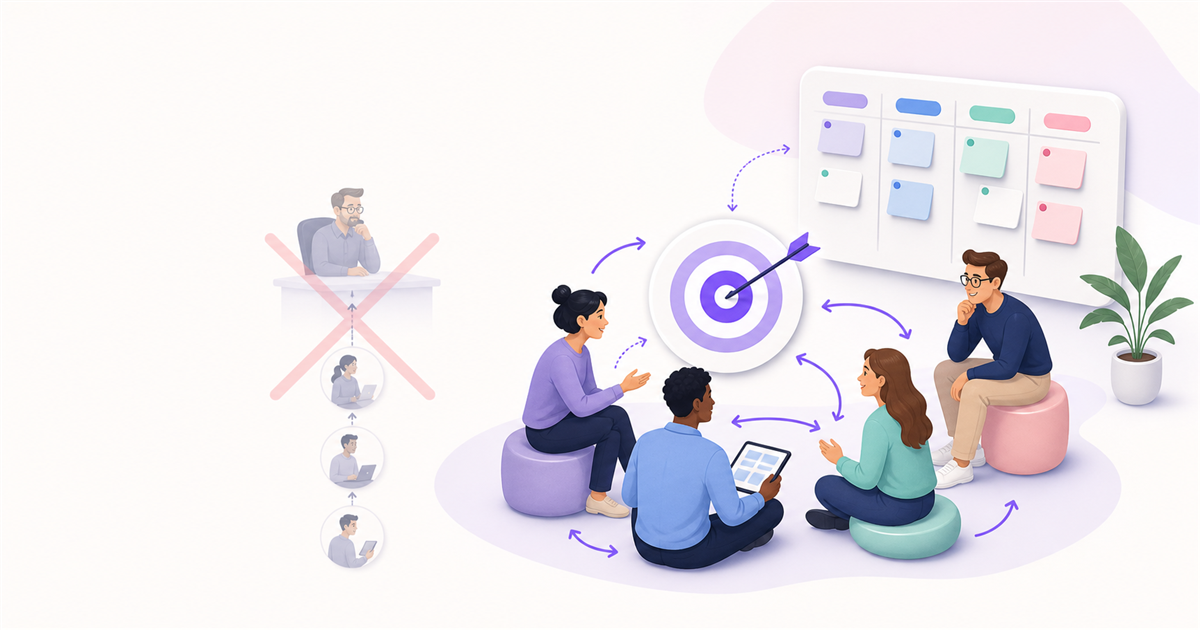
The purpose of the Daily Scrum is to inspect progress toward the Sprint Goal and adapt the Sprint Backlog, producing an actionable plan for the next day of work. It is a 15-minute event for the Developers of the Scrum Team.
It is not primarily a report to the Scrum Master, Product Owner, manager, or tracking system. When everyone speaks toward one authority figure, the event shifts from self-management to individual accountability reporting.
Organize the conversation around the Sprint Goal
Start from the current objective and the state of work needed to achieve it. Discuss what changed, where collaboration is needed, which risks threaten the goal, and how the plan should adapt before the next Daily Scrum.
The familiar three questions are optional and can encourage isolated reports when applied mechanically. Developers may use any structure that serves the event’s purpose and fits within the timebox.
- What did we learn about progress toward the Sprint Goal?
- Which work needs collaboration today?
- What threatens the goal or Definition of Done?
- How should the Sprint Backlog change now?
Expose problems in the event and solve them with the right people afterward
The Daily Scrum should make impediments and coordination needs visible, but it does not need to solve every technical problem in 15 minutes. Identify who will continue the discussion and let people who are not needed return to their work.
Developers do not need to wait for the Daily Scrum to ask for help or adapt their plan. The event establishes a minimum daily inspection opportunity, not a gate for communication.
Measure whether the meeting improves the next day of work
After the event, Developers should understand the current risk to the Sprint Goal and what they will coordinate next. A meeting that finishes quickly but produces no adaptation may be efficient only in appearance.
Use the Sprint Retrospective to inspect recurring problems such as manager reporting, invisible work, weak Sprint Goals, excessive work in progress, or absent collaboration. Improve the system rather than adding more scripted questions.
Technical implementation notes
A process model needs an explicit scope, start and end events, actors, inputs, outputs, decisions, exceptions, and ownership. Use consistent symbols and verb-led activity labels, and separate the normal path from failures, retries, escalations, and manual review.
Validate the model by walking through real cases with the people who perform the work. Record assumptions, system boundaries, rule sources, version, owner, and review date so the diagram remains traceable instead of becoming an attractive but stale picture. The most relevant concepts here are Daily Scrum, Daily Scrum vs status meeting, standup meeting. Define them when first used and apply each term consistently to an observable element, rule, or outcome.
- Every branch has a labeled condition
- Activities identify an action and responsible actor
- Exceptions and handoffs are visible
- The model has an owner and review trigger
Worked example: How to Run a Daily Scrum Without Turning It Into a Status Meeting
Consider a Scrum Team improving account recovery. Connect the Product Goal to a Sprint Goal focused on reducing failed recovery attempts, select a small set of Product Backlog items, and make the Definition of Done visible beside the usable Increment rather than treating completion as a ticket status.
During the Sprint, inspect progress toward the goal, adapt the Sprint Backlog when an integration risk appears, and bring measured recovery results to the Sprint Review. Use the Retrospective to choose one owned improvement to the team's testing workflow, then show how that adaptation enters the next Sprint.
Conclusion
Taken together, the daily scrum is a planning event for developers, organize the conversation around the sprint goal, expose problems in the event and solve them with the right people afterward, and measure whether the meeting improves the next day of work show that “How to Run a Daily Scrum Without Turning It Into a Status Meeting” is not an isolated technique. The article connected its central principles to implementation details and a practical case, making the tradeoffs easier to see.
In our view, Scrum works through transparent goals, usable Increments, frequent inspection, and real adaptation—not through mechanically scheduling meetings or enforcing optional practices as rules. A visual model should preserve those feedback loops and the self-management on which they depend.
Create the visual journey
Turn your process into a presentation
Build the diagram, choose the sequence, add narration or webcam video, and preview the camera movement in your browser.
Open Praebere