
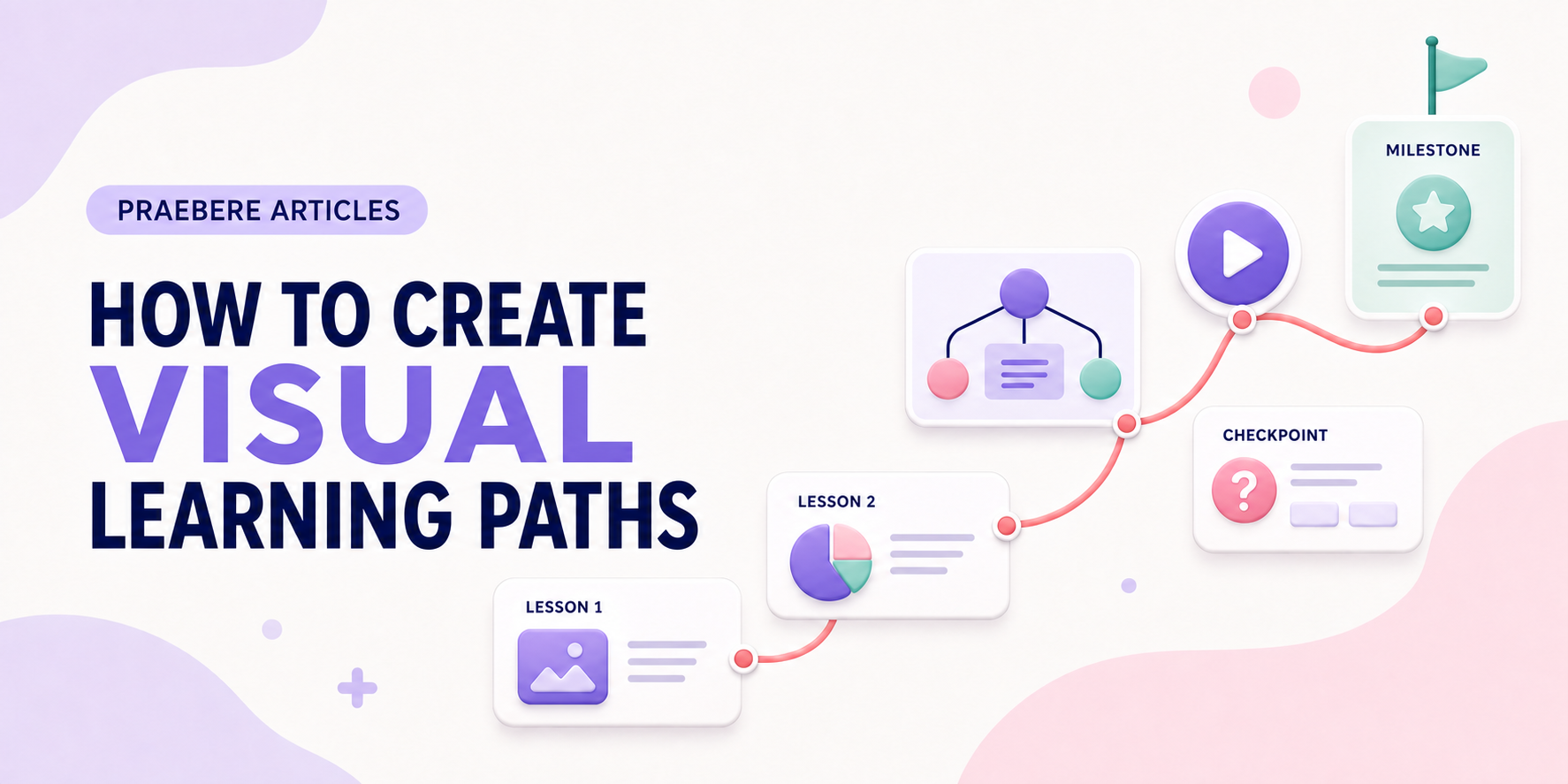
The practical decisions behind “How to Create Visual Learning Paths”
Good intentions are not enough for “How to Create Visual Learning Paths”; the result depends on how the author handles “Define the destination and evidence of learning.” Design backward from an observable learning outcome.
The practical challenge begins when general advice meets real content, real constraints, and a real audience. What should learners be able to explain or do after the presentation, and how will you know they understood rather than merely recognized the content? Which examples, practice, and feedback will help them transfer the idea to a new situation? The sections ahead use these questions to move from the central idea to concrete decisions, technical criteria, and an applied example.
Define the destination and evidence of learning
Begin with what learners should be able to do at the end and how they will demonstrate it. A learning path should connect activities to outcomes rather than list content in the order it was collected.
Identify the audience, starting knowledge, constraints, and available time. Different entry points may be necessary when learners arrive with substantially different experience.
Map prerequisites and meaningful milestones
Break the destination into capabilities and determine which concepts or skills depend on others. Use milestones that represent usable progress, not merely the completion of a content unit.
Keep the overview simple. Detailed resources, examples, and assessments can sit behind each node rather than filling the complete map with text.
Add choices only when they serve a learning need
Branches can support role-specific examples, remediation, advanced exploration, or different practice contexts. Label the purpose of each choice so learners understand why they might take it.
Include checkpoints that help learners decide whether to continue, review, or try another path. Completion indicators alone do not show whether the underlying capability has developed.
Introduce the path as a navigable model
Show the whole journey first, explain major phases, and revisit the map as learners progress. Consistent color, shape, and connector meaning helps the path function as an orientation tool throughout the course.
Praebere can build the connected map, present a guided overview as video, and export interactive HTML for later navigation. Keep resource links and assessment records in systems suited to maintaining that learning content.
Technical implementation notes
Design backward from an observable learning outcome. Separate essential content from supporting detail, activate prior knowledge, model the task, provide guided practice, and then ask learners to retrieve or apply the idea without seeing the answer.
Manage intrinsic complexity through sequencing and worked examples, and reduce extraneous load by removing redundant text, irrelevant motion, and split attention. Use formative checks to reveal misconceptions and provide feedback before the final assessment. The most relevant concepts here are visual learning path, learning journey map, course roadmap. Define them when first used and apply each term consistently to an observable element, rule, or outcome.
- Outcome describes what the learner will do
- Example makes expert reasoning visible
- Practice requires retrieval or application
- Feedback explains why an answer works
Worked example: How to Create Visual Learning Paths
Imagine teaching a new employee how to approve an expense. State the outcome—correctly classify and route a request—then show one worked example while explaining why each branch is chosen. Follow it with a similar case in which the learner must predict the next step before the answer appears.
Give feedback on the rule, not only “correct” or “incorrect,” and finish with a new case containing an exception. The flowchart remains a reference after the lesson, while retrieval and varied practice reveal whether the learner can actually perform the task.
Conclusion
Taken together, define the destination and evidence of learning, map prerequisites and meaningful milestones, add choices only when they serve a learning need, and introduce the path as a navigable model show that “How to Create Visual Learning Paths” is not an isolated technique. The article connected its central principles to implementation details and a practical case, making the tradeoffs easier to see.
In our view, clear visuals can guide attention, but durable learning must be judged by what people can retrieve, explain, and do afterward. Practice and feedback matter more than how complete the presentation appears.
Create the visual journey
Turn your process into a presentation
Build the diagram, choose the sequence, add narration or webcam video, and preview the camera movement in your browser.
Open Praebere